Mohammadi Machar Colony:
Community Driven Development Project
Community Driven Development project:
The Community Driven Development Project is a pilot project designed to meet the needs of the residents of Mohammadi Colony in accordance with CFC’s mission. It addresses the Colony with a holistic approach in order to build a long standing model for sustainable development for those living in similar at-risk populations. The project aims to enter the community, empower pre-existing health and education facilities simultaneous to providing residents with awareness and guidance on how to enhance the quality of their lives. The entore Community Driven Development Project is divided into three main areas, with several specific projects under each thematic area.
Thematic Areas
- Health
- Education/Livelihood
- Environment
Mohammadi Machar Colony :
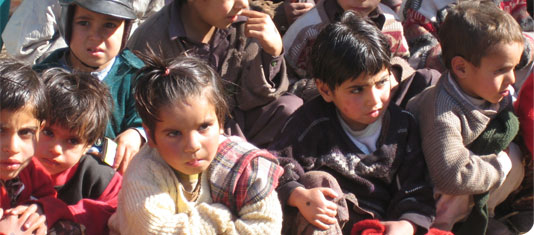
Mohammadi (Machar) Colony is located behind the railroad tracks on Maripur Road in Karachi. It is a densely populated 4 sq. km stretch of land, housing over 700,000 settlers. In 2000 CFC received project funding in the amount of 59,000-Pound Sterling from Charities Aid Foundation for a Healthcare and Health Education Project (HCEP) in Mohammadi Colony (the colony is commonly known as Machar Colony, derived from both the large population of machayr i.e. fishermen in the area as well as from the abundance of mosquitoes i.e. machar found in the area during nighttime). Due to legal/property issues with Karachi Port Trust (KPT), it remains one of the most underdeveloped areas of Karachi. The illegal occupation of the land has become an excuse for both government and private organizations to turn a blind eye on the devastating water, sanitation, literacy and basic human rights conditions prevailing in Mohammadi Colony.
Although almost all residents of the community are of the Muslim religion, they come from a variety of ethnic backgrounds. The wide ethnic diversity of the community is attributed to the residents being displaced persons from Afghanistan, Burma and Bangladesh. CFC’s needs assessment estimated that over fifty percent of Mohammadi Colony’s residents were of Bangladeshi descent, with only second generation Bangali women learning to speak Urdu.
There is an 80% illiteracy rate in the community, with a majority of these numbers being women and girls. Less than ten percent of the community’s children attend school, as they are encouraged by their families to seek employment – usually within the shrimp peeling industry.
1. Programs under the Healthcare Initiative:
Mother Child Health Clinic (MCH)
The MCH has been strategically located in the center of Mohammadi Colony. The clinic is fully staffed with an MBBS doctor and a Lady Health worker. The MCH services approximately 65 patients on a daily basis. The MCH constantly provides low-cost health care services, vaccines, treatment, screenings, referrals, access to primary, preventive health care and awareness of hygienic practices in the community. The medical staff at the MCH serves as the only qualified medical practitioners in this community.
Tuberculosis Intervention
In order to eradicate and treat tuberculosis, a preventable and curable disease, the School-to-School Tuberculosis Intervention Program (TIP) was initiated in December 2005, and facilitates students who test positive for Tuberculosis through the Mobile Healthcare program. CFC has established a reliable relationship with the Lyari General Hospital for this particular program.
Healthcare Camps
Following extensive research via water toxicology reports, needs’ assessments and interviews carried out with residents in Mohammadi Colony, CFC determined the community’s residents are highly prone to skin diseases due to the poor hygiene and sanitation conditions therefore to provide health education and consultations CFC Started healthcare camps in 2000 which continue to be repeated on a quarterly basis. Each camp provides free medical consultation/s, referrals for treatment, and medication. In the past, healthcare camps have been held in partnership with the Pakistan Medical Association, Civil Hospital, and the Welfare Association for Dermatological Patients (WADeP). The camps are designed to specifically target the needs of the colony residents. Hence, CFC offers a Skincare camp, a Pediatric camp, and a Gynecology camp. On average the camps facilitate 800 individuals in a six hour period.
Community Awareness Meeting
Weekly Community Awareness Meetings are conducted throughout the community in order to provide health education and an open forum for the women and men of Mohammadi Colony to voice their concerns and ideas. Awareness meetings are held each week in a different community member’s home, and are attended by community members and CFC’s community doctor and community mobilizer. The meetings are segregated both due to cultural reasons and in order to give the women an unrestrained forum for discussion. The intent of the meetings is to provide health education to the community, to stimulate personal interactions between the community residents and CFC staff, as well as to discuss issues pertaining to the social and economic barriers that the residents face as a community. This forum will also be used as a starting point for the creation of Community Based Organizations (CBO’s).
2. Programs under the Education/Livelihood Initiative:
Training of Traditional Birth Attendants
A United Nations Population Fund report identifies Pakistan as having some of the highest rates of neonatal and maternal mortality in the world. 80% of Pakistani’s women given birth at home and about two thirds of them receive no prenatal care. Since there is little or no government care and most patients can not afford to travel far for monthly check ups, many women never know that they are high risk. In the vast majority of cases, these deaths are entirely preventable with early identification of problematic pregnancies and consistent follow up care.
The vast majority of births in Machar Colony take place at home with little or untrained assistance. Local Midwives or Daees generally have many years of delivery experience but no instruction in identifying high risk pregnancies. In addition, a lack of access to clean delivery tools increases the risk of maternal and newborn infections leading to increased maternal and neonatal mortality.
CFC’s TBA training program recruits local Daees and provides comprehensive training on identifying and referring risky pregnancies as well as emphasizes clean delivery practices, family planning and infant inoculations. We work in conjunction with other local NGO’s such as the Midwives Association of Pakistan and Greenstar Social Marketing to provide training, ongoing supervision and access to safe delivery kits. Because we work with midwives in the community, training also leads to a better income for them and their families.
Project Kitab ***
Through CFC’s mobile healthcare program, CFC has developed a close relationship with several local schools in Mohammadi Colony. CFC’s project staff has observed that the provision of education is beset with difficulties. Problems such as unqualified teachers, lack of basic lighting, ventilation, and sanitation, as well as massive shortage of school supplies.
Based on these findings CFC is launching education projects that will capacity build within existing educational facilities which will eventually allow them to become self sufficient and effective. Project Kitab will initially be introduced in five private schools, with the aim of replicating the project in all 30 private schools in the Colony by 2010. The project will assist the selected schools in several different ways such as adding on infrastructure facilities or strengthening the existing ones by providing repairs, repainting, building toilet facilities also Provision of teaching materials on a needs basis. Moreover Syllabus review and development will be provided, which will follow government guidelines coupled with additional requirements determined by CFC. These will include the introduction of art, physical education, and extra curricular activities. CFC is also aiming for Teacher and administration training. Teachers will be required to fulfill provincial educational department requirements so that they are recognized as certified teachers of the Government of Sindh.
3. Environment Initiative
“Chula Chowk” Project
In 2009, CFC has launched the first "chula chowk" or community kitchen in Karachi. This project developed out of an awareness that low income families were spending up to 20% of their monthly income on firewood. Along with the environmental degredation caused by the deforestation of surrounding Mangroves, families cooking on firewood, often in enclosed spaces, suffer from a high rate of respiratory illnesses.
The Chula Chowk Pilot Project is based in the Bengali area of Machar colony and houses several stoves which are equipped with LPG (gas) cylinders. Women at the chula chowk will cook in three shifts with a one hour information session twice a week. Information sessions will cover nutrition, food hygiene and also serve as a platform for CFC to launch its mental health awareness talks. The chula chowk pilot project will serve 50 women.
Through this intervention CFC aims to change women's health and hygiene beliefs, as well as to provide a safe space for sharing and problem solving on daily life issues. The introduction of natural gas as a "clean fuel" will eventually be phased out as solar cooking options become more affordable.
“Garbage is Gold” Project ***
Sanitation in Machar Colony is an undisputed problem which affects the lives of every resident in the Colony. The main water source of Machar Colony lies under layers of solid waste. Health concerns related to solid waste include skin and eye infections, diarrhea, dysentery, typhoid, hepatitis, cholera, flea-born fever, and intestinal diseases. Rodents, mosquitoes, and other insects are attracted to garbage and can increase transmission of these diseases within the Colony. To create awareness in Mohammadi Colony about the necessity of good sanitation and the health benefits of living in a clean environment. CFC hold formal meetings regarding sanitation conditions in Machar Colony with Colony Councilmen.
A sanitation project in Machar Colony involves an awareness campaign which explains the connection between health and good sanitation, including a collaborative awareness play.
***New Initiative – yet to be implemented